How I became my own worst colleague
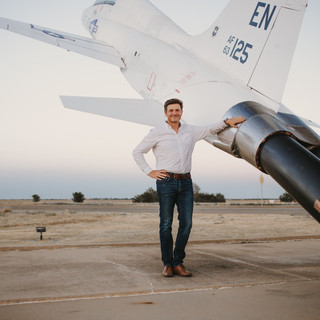

Kandahar, Afghanistan, 2010. I was the Weapons Officer of our deployment. The job suited me perfectly: meticulous, by-the-book, anxious to get it right. Cherry on the cake, I was deployed with one of my good squadron buddies, so what could possibly go wrong?
For a month or so, it worked beautifully. Then the more I pushed for precision, the more I was met with resistance, and it eventually boiled over into a clash between my buddy and me, in the Ops room, in front of the rest of the squadron.
Pressure turns differences into friction
My buddy and I weren't incompatible, we were complementary. That is, until stress and fatigue turned those same differences into friction.
Stress and fatigue measurably impairs our thinking, we abandon flexible thinking and perspective-taking, and shifts toward more rigid thinking, falling back on habitual patterns. My friend wasn't getting harder to work with... I was the one getting harder to work with, because I was exhausted, and exhaustion exposed the dark side of some of my best personnality traits. Attention to detail and striving for perfection turned into being intolerant and overbearing.
It all start with self-awareness
Daniel Goleman's emotional intelligence framework is a great visualization of where every leadership journey has to start, and eventually get to. Self-awareness is the base upon which the other skills are build. You cannot manage what you haven't first noticed in yourself, and you're in no position to read the room if you can't read yourself. Skip this step and every other leadership skill you build sits on sand.

Most people think they're self-aware
Organizational psychologist Tasha Eurich ran a very interesting multi-year research program and found a remarkable gap between perception and reality: the large majority of people rate themselves as self-aware, but only a minority actually meet the bar (I was certainly not part of that minority in 2011 at Kandahar). Ultimately, that gap has a cost, Eurich's research also demonstrated that higher self-awareness led to better decisions, stronger relationships, and more effective leadership overall.
Personality testing tools like DISC, Insights Discovery, or Core Talents Analysis aren't rigorous science, and I say that upfront in every session I teach. But dismissing them outright misses the point. Their real value doesn't lie in labelling your personality. It lies in handing a team a shared vocabulary to name what's happening before it costs you a friendship or a job, and in forcing you through the one exercise most leaders skip: actually looking at yourself. Despite their imperfections, these tools do the job of step one.
In practise
Here are a few practical examples of traits turning dark under pressure or fatigue. Some may look familiar:
Decisiveness turns into impatience, you stop asking and start ordering.
Analytical turns rigid, you stop accepting "good enough".
Sociable, big-picture thinking turns scattered, you overpromise.
Empathetic, harmony-seeking turns into conflict avoidance.
None of these are character flaws. They're ordinary strengths, tipping into their dark side when left unchecked.
By the time you notice the thought, you've usually already acted on it. The quicker tell is in the body, not the mind: a clipped voice, a tightening jaw, the urge to talk over someone before they've finished. Learn to read those first, and you buy yourself a few seconds you didn't have before — enough to catch the shift before it becomes the story your team tells about you afterward.
The best part
I became a Squadron Commander (CO) in 2015, my buddy a couple of years later. If at the time you'd asked, "Who looks like CO material?", probably few would have picked the relational one over the decisive, meticulous one but as it turned out, my friend was an excellent CO. He was a leader with a vision, who supported his people, and who was able retain talent.
What got him there wasn't the personality he had. It was that he'd already done the step-one work: he knew his own default under pressure, and he managed it before it managed him. There's no one personality that makes a good leader. There's only the one who did the work of knowing themselves first.
As for the two of us, our friendship survived Kandahar, because we eventually sat down and named what had actually gone on.
Sources: Eurich, T. (2018), Harvard Business Review; Goleman, D. (1998), Working with Emotional Intelligence, Bantam Books.


Comments